Foil vs. Spot UV vs. Embossed Business Cards: Which Finish Should You Choose?
Choosing the right business card finish can help your brand stand out, communicate quality, and leave a lasting impression. Foil business cards, spot UV business cards, and embossed business cards each create a different look and feel. The best option depends on your brand identity, design, budget, and how you plan to use your cards.
At Zebra Printing, businesses in Bellevue, Seattle, and surrounding Washington communities can explore custom business card printing options for networking, client meetings, sales teams, and professional events.
Foil vs. Spot UV vs. Embossed Business Cards: What's the Difference?
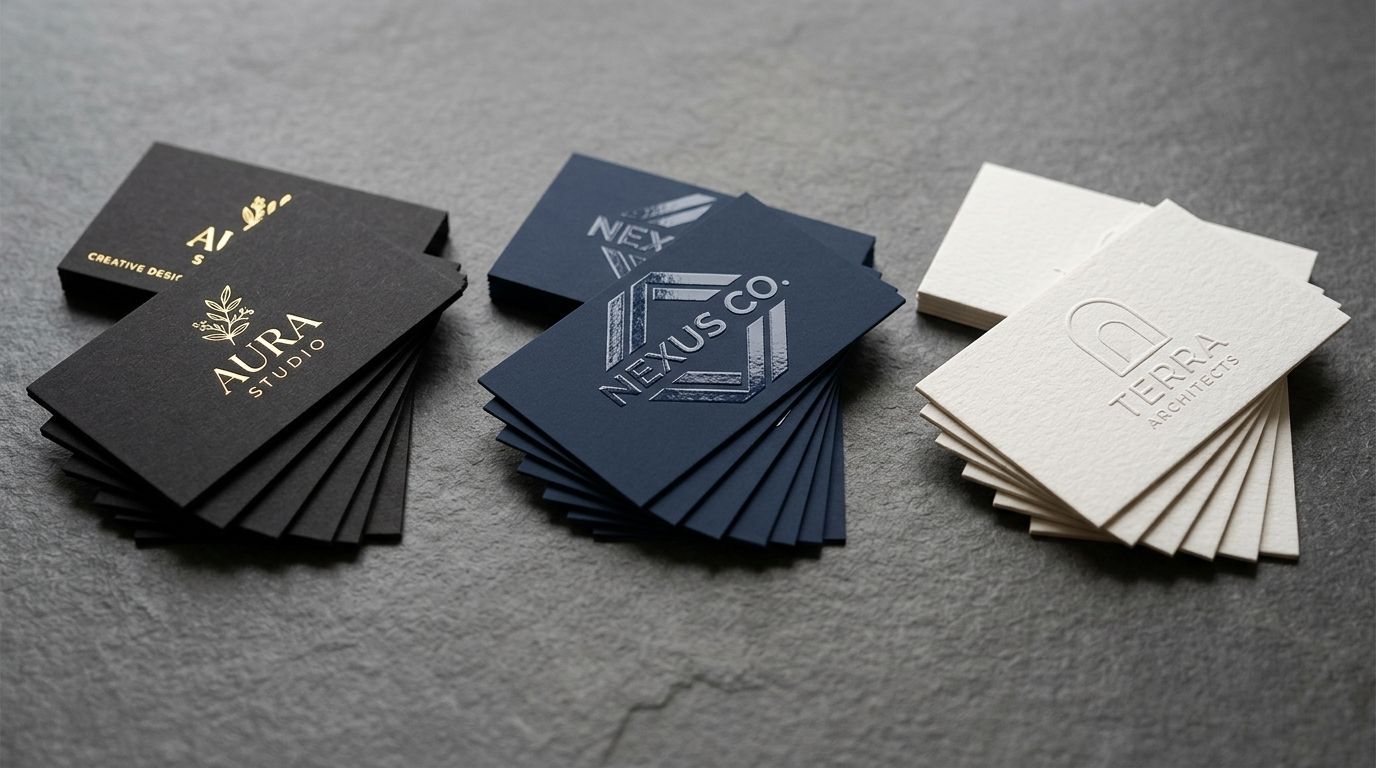
Foil business cards use metallic or specialty foil to highlight selected design elements. Spot UV business cards use a glossy coating on specific areas of the card. Embossed business cards feature raised details that add texture and dimension.
Feature | Foil Business Cards | Spot UV Business Cards | Embossed Business Cards |
|---|---|---|---|
Appearance | Metallic or specialty shine | Glossy highlights | Raised design elements |
Best for | Logos, names, premium branding | Logos, patterns, selected text | Logos, initials, typography |
Main benefit | Eye-catching reflective detail | Contrast between glossy and matte areas | Distinctive tactile texture |
Brand impression | Premium and polished | Modern and professional | Refined and memorable |
Design consideration | Keep foil artwork clear and suitable for the process | Use contrast to make coated areas noticeable | Choose elements that work well as raised details |
The right finish depends on which parts of your design you want customers to notice first.
1. Foil Business Cards: Add Metallic Impact
Foil business cards use a thin layer of metallic or specialty foil to highlight selected elements. Gold and silver are popular choices, while other foil colors may be available depending on the printing process.
Foil can make a company logo, business name, initials, or key design detail more noticeable. It works especially well when you want a premium appearance without covering the entire card in decorative effects.
When should you choose foil business cards?
Foil business cards can be a good choice for:
- Real estate agents and property professionals
- Corporate executives and consultants
- Luxury retail and boutique brands
- Financial and professional services
- Event planners and premium service businesses
Design tip: Use foil selectively. Highlighting a logo or a small amount of text often creates a cleaner result than applying metallic effects to every element.
If you want business cards that make your brand immediately recognizable, ask about custom foil business card options and suitable paper stocks.
2. Spot UV Business Cards: Highlight Selected Design Elements
Spot UV applies a glossy coating to specific areas of a business card. It is often paired with a matte or uncoated-looking background to create contrast between glossy and less reflective surfaces.
For example, a business card might feature a matte background with a glossy logo. When the card catches the light, the logo becomes more noticeable without relying on metallic color.
When are spot UV business cards a good option?
Consider spot UV when you want to:
- Highlight a company logo or brand symbol
- Add contrast to a minimalist design
- Create a contemporary professional look
- Draw attention to selected graphics or patterns
- Give a premium card more visual depth
Design tip: Spot UV is most effective when the coated areas are easy to distinguish from the rest of the design. Very small details may not reproduce as intended, depending on the production method.
Spot UV is a practical option for businesses that want a distinctive finish while maintaining a clean, modern design.
3. Embossed Business Cards: Add Texture and Dimension
Embossing creates raised areas on a printed surface. Instead of relying only on color or shine, embossed business cards use texture to make selected design elements stand out.
A raised logo, monogram, or business name can give a card a different feel when someone picks it up. Embossing can be used on its own or combined with other finishing techniques when the production method and artwork allow it.
Who should consider embossed business cards?
Embossing may suit:
- Consultants and established professional firms
- Premium service providers
- Creative studios and designers
- Boutique businesses
- Brands that want a tactile presentation
Design tip: Choose a simple, clear element for embossing. Overly detailed artwork and very small lettering may not produce the intended effect.
Embossing is worth considering when the physical feel of your business card matters as much as its visual appearance.
Which Business Card Finish Is Best for Your Business?
There is no single best finish for every brand. Start with your marketing goal, then select the finish that supports it.
Choose foil if you want metallic details
Foil is suitable when you want your logo, initials, or business name to catch the light. It is particularly useful for premium branding and designs that benefit from a metallic accent.
Choose spot UV if you want glossy contrast
Spot UV is a good option for highlighting selected areas against a matte background. It suits modern designs, graphic logos, and businesses looking for a subtle but noticeable finish.
Choose embossing if you want a tactile effect
Embossing adds raised details that customers can feel. It can be a strong choice for brands that want a textured, distinctive business card.
Before placing your order, consider your artwork, preferred paper stock, quantity, budget, and production timeline. Ask your printer which combinations are available and whether your design needs adjustments.
Can You Combine Foil, Spot UV, and Embossing?
Some premium business card projects can combine finishing techniques, depending on the materials, artwork, and production capabilities available.
For example, a design might use foil on a logo and a different finish on selected supporting elements. However, combining effects can increase complexity and cost. It is important to confirm compatibility and request a proof or production guidance before ordering.
For a balanced result, choose one primary finish and use additional effects only where they serve a clear purpose.
How to Prepare Your Artwork for Premium Business Card Printing
Good artwork helps your chosen finish reproduce as intended. Before submitting your design, review these points:
- Use a clear logo: Avoid unnecessary detail in the element you want to highlight.
- Check text readability: Keep essential contact details easy to read.
- Allow for bleed and safe margins: Follow the printer's template and file specifications.
- Prepare finishing artwork correctly: Foil, spot UV, and embossing may require separate artwork layers or masks.
- Confirm colors and materials: Screen colors do not always match the final printed result.
- Review the proof: Check spelling, contact details, alignment, and the placement of special finishes before approving production.
If you are unsure how to prepare your file, ask Zebra Printing about the artwork requirements for your selected business card finish.
Premium Business Card Printing in Bellevue and Seattle
Whether you are ordering cards for a new business, updating your company's identity, or preparing for an upcoming networking event, the right finish can help your printed materials represent your brand professionally.
Zebra Printing serves businesses in Bellevue, Seattle, and nearby Washington communities with commercial printing solutions. Choose a business card design that reflects your brand, communicates your details clearly, and fits the way you meet customers.
When requesting a quote, provide your preferred finish, card quantity, artwork status, and required delivery date. This helps the printing team assess your requirements and advise on suitable options.
Ready to create custom business cards? Contact Zebra Printing to discuss your design, explore available finishes, and request a quote for your business card printing project.
Why Choose Zebra Printing?
- Business-focused printing: Printed materials for networking, client meetings, promotions, and everyday business use.
- Custom presentation options: Discuss the finish and card style that best match your brand.
- Local service area: Serving businesses in Bellevue, Seattle, and surrounding Washington communities.
- Support with print requirements: Confirm artwork specifications and finishing options before placing your order.
- Commercial printing solutions: Coordinate business cards with other printed marketing materials for a consistent brand identity.
Contact Zebra Printing to discuss your project and find the right business card option for your needs.
Frequently Asked Questions
What is the difference between foil and spot UV business cards?
Foil adds a metallic or specialty foil effect to selected areas, while spot UV adds a glossy coating to specific parts of the card. Foil creates reflective highlights; spot UV creates contrast between coated and uncoated-looking areas.
Are embossed business cards worth it?
Embossed business cards may be worthwhile when texture and a tactile presentation are important to your brand. They can help selected elements stand out, although the best choice depends on your design, budget, and intended audience.
Which business card finish looks the most professional?
All three finishes can look professional when used appropriately. Foil suits metallic accents, spot UV works well for modern glossy contrast, and embossing adds raised texture. Choose the one that best matches your brand and design.
Can I use foil and embossing on the same business card?
Some production methods allow multiple finishing techniques, but compatibility depends on the materials, artwork, and printing process. Confirm the available options with your printer before finalizing your design.
Do premium business card finishes cost more?
Special finishes may cost more than standard business card printing because they can require additional materials, setup, or production steps. Request a quote based on your quantity, paper stock, design, and selected finish.
How do I choose the right paper for premium business cards?
Consider thickness, surface texture, durability, and how the paper will work with your chosen finish. Not every paper stock supports every finishing process, so confirm compatibility before ordering.
Where can I order custom business cards in Bellevue or Seattle?
Businesses can contact Zebra Printing to discuss custom business card printing and available finishing options in the Bellevue and Seattle service area. Share your artwork, quantity, preferred finish, and deadline when requesting a quote.
