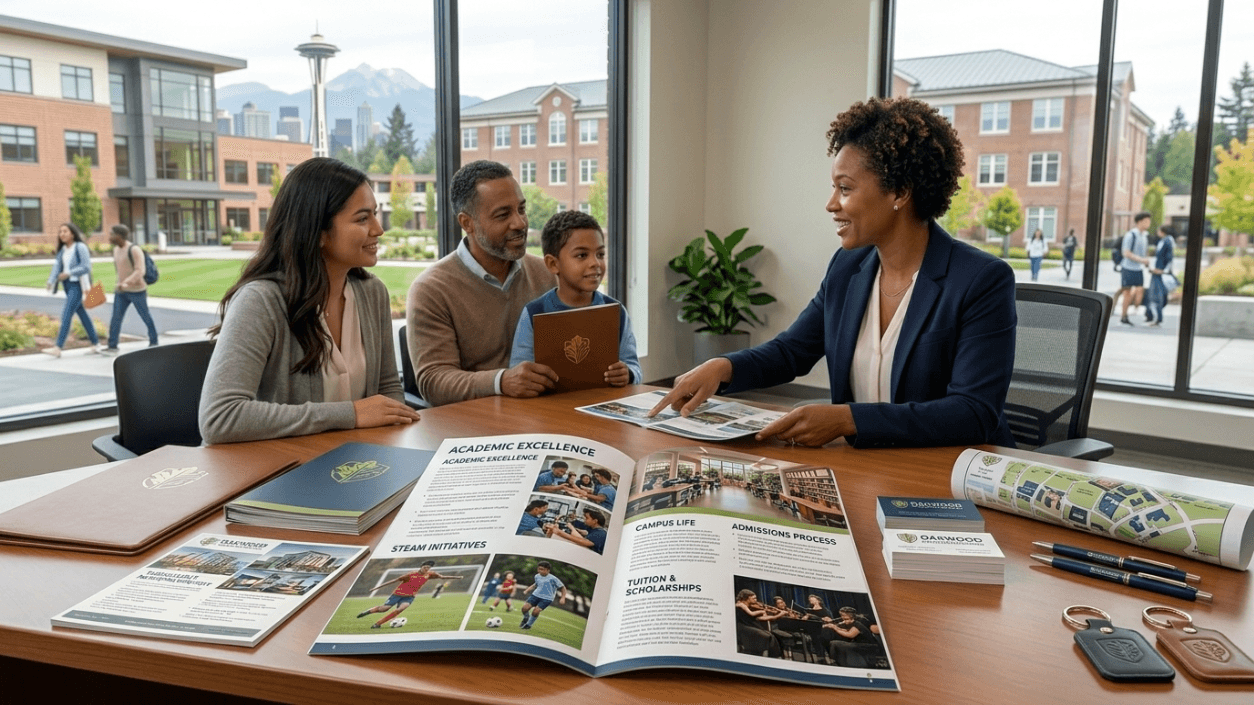
For many families, a school brochure is the first tangible representation of your institution. While websites, social media pages, and online reviews help parents begin their research, a professionally printed brochure often becomes the document they refer to repeatedly while comparing educational options.
Parents may place it on their kitchen table, discuss it with other family members, or bring it along during campus visits. Unlike digital advertisements that disappear with a click, brochures remain visible and continue reinforcing your school's message throughout the decision-making process.
A poorly designed brochure can create doubt, while a professionally printed brochure communicates quality, trust, and attention to detail. Every page should reassure parents that your school is organized, welcoming, and committed to educational excellence.
Whether you're promoting a preschool, private academy, charter school, K-12 institution, college, or university, your brochure should inspire confidence and motivate prospective families to take the next step.
In this guide, you'll learn how to create school brochures that not only look beautiful but also support admissions, strengthen your brand, and increase student enrollment.
Why School Brochures Still Matter
Many schools focus heavily on digital marketing, but brochures continue to play a critical role in the enrollment journey.
A brochure provides something digital media cannot, a physical, lasting connection between your school and prospective families.
Parents often use brochures to:
- Compare schools side by side
- Review academic programs
- Learn about extracurricular activities
- Discuss options with family members
- Prepare questions before visiting campus
- Keep important admissions information readily available
Professionally printed brochures also communicate credibility. High-quality paper, vibrant printing, and thoughtful design reflect the same level of excellence parents expect from your educational institution.
What Makes a Great School Brochure?
An effective brochure does much more than list facts about your school. It should tell a compelling story that answers the questions parents are already asking.
Your brochure should clearly communicate:
- Who you are
- What your school believes
- What makes your programs unique
- Why students succeed
- How parents can begin the admissions process
Instead of overwhelming readers with long paragraphs, combine concise messaging with engaging visuals and logical organization.
Tip 1: Start with a Powerful Cover
Your cover page determines whether parents continue reading.
An effective cover should include:
- School logo
- Professional photography
- Inspiring headline
- School tagline
- Consistent branding
- Clean layout
Avoid clutter. The cover should create curiosity and encourage parents to explore the rest of the brochure.
Tip 2: Tell Your School's Story
Parents connect with stories more than statistics.
Rather than simply stating that your school has experienced teachers or modern classrooms, explain your mission and educational philosophy.
Share:
- Why your school was founded
- Your educational values
- Student-centered approach
- Commitment to academic excellence
- Community involvement
Authentic storytelling helps families understand what makes your institution different.
Tip 3: Use Professional Photography
Nothing influences perception more than authentic images.
Include photographs of:
- Students learning
- Teachers interacting with classes
- Science laboratories
- Libraries
- Athletic facilities
- Performing arts
- Campus events
- Graduation ceremonies
Avoid generic stock photos whenever possible. Real photography builds trust and creates an emotional connection with prospective parents.
Tip 4: Focus on Benefits, Not Just Features
Instead of listing facilities or programs, explain how they benefit students.
For example:
❌ "State-of-the-art science laboratory."
✅ "Our fully equipped science laboratories encourage hands-on learning, helping students develop critical thinking and problem-solving skills that prepare them for future careers."
Parents care more about outcomes than facilities alone.
Tip 5: Include Student Success Stories
One of the most persuasive elements of any brochure is proof that your school delivers results.
Highlight:
- Academic achievements
- Scholarship recipients
- College acceptance rates
- Competition winners
- Alumni success stories
- Student testimonials
Real success stories help parents envision similar opportunities for their own children.
Tip 6: Make Admissions Simple
Parents should immediately understand how to apply.
Include:
- Admission requirements
- Important dates
- Tuition information (if appropriate)
- Application steps
- Campus tour details
- Contact information
- QR code linking to the admissions page
Removing confusion makes it easier for families to move forward with enrollment.
Tip 7: Choose the Right Brochure Format
The format of your brochure should match the amount of information you want to present.
Popular options include:
- Tri-fold brochures – Great for admissions overviews and open house promotions.
- Bi-fold brochures – Ideal for presenting your school's story with larger visuals.
- Multi-page booklets – Perfect for comprehensive enrollment guides, private schools, colleges, and universities.
Selecting the right format improves readability and ensures parents can easily navigate your content.
Tip 8: Use a Consistent Color Palette
Your brochure should reinforce your school's visual identity.
Stick to your official:
- School colors
- Typography
- Logo placement
- Graphic style
- Iconography
Consistency across brochures, banners, flyers, websites, and social media strengthens brand recognition and creates a more professional impression.
Tip 9: Keep the Layout Clean and Easy to Read
A brochure filled with dense text can overwhelm readers. Use white space strategically to create a clean, organized layout.
Best practices include:
- Short paragraphs
- Bullet points
- Clear headings
- High-contrast text
- Balanced image placement
- Plenty of margins
An easy-to-read brochure encourages parents to absorb your message rather than skim or discard it.
Tip 10: Add Clear Calls to Action
Every brochure should encourage readers to take the next step.
Examples include:
- Schedule a Campus Tour
- Apply Today
- Download Our Admissions Guide
- Register for an Open House
- Contact Our Admissions Team
Pair your call to action with a QR code and website URL to make it easy for parents to respond immediately.
Tip 11: Showcase Your Academic Excellence
Parents choose schools based on outcomes, not promises. Your brochure should clearly demonstrate the quality of education students receive.
Highlight:
- Student-to-teacher ratio
- Graduation rates
- College acceptance statistics
- AP or IB programs
- STEM education
- Arts and music programs
- Language immersion
- Career and technical education
- Academic awards
Instead of overwhelming parents with numbers, explain how these achievements benefit students and prepare them for future success.
Tip 12: Feature Your Faculty
Parents are trusting your teachers with their children's future. Introduce your faculty and show why they are one of your school's greatest strengths.
Include information about:
- Teacher qualifications
- Years of experience
- Certifications
- Professional development
- Student mentoring
- Teaching philosophy
Professional faculty photos and short biographies help personalize your school and build confidence.
Tip 13: Highlight Student Life
Families want to know what life is like beyond the classroom.
Include sections covering:
- Athletics
- Clubs
- Robotics
- Performing arts
- Music
- Student leadership
- Community service
- School trips
- Cultural activities
A vibrant student life demonstrates that your institution supports well-rounded development.
Tip 14: Include Parent Testimonials
Testimonials build trust because they come from real experiences.
Ask satisfied parents questions like:
- Why did you choose our school?
- How has your child grown?
- What impressed you most?
- Would you recommend us?
Feature authentic quotes with names (where permission is granted) and photographs whenever possible.
Tip 15: Use Infographics
Visual content makes complex information easier to understand.
Examples include:
- Graduation rates
- College placements
- Student achievements
- Class sizes
- Extracurricular participation
- Scholarship awards
Infographics make your brochure more engaging while reducing large blocks of text.
Tip 16: Add QR Codes Strategically
QR codes bridge the gap between print and digital marketing.
Link parents directly to:
- Virtual campus tours
- Admissions forms
- Tuition information
- Application portal
- School videos
- Testimonials
- Event registration
Always test QR codes before printing thousands of brochures.
Tip 17: Select the Right Paper Stock
The quality of your brochure isn't determined by design alone.
Premium paper instantly communicates professionalism.
Popular choices include:
- 100 lb Gloss Text
- 100 lb Matte Text
- Silk-coated paper
- Premium uncoated stock
- Recycled paper options
A thicker, high-quality paper feels more substantial and leaves a stronger impression.
Tip 18: Consider Premium Finishes
Special finishes help your brochure stand out.
Popular finishing options include:
- Soft-touch lamination
- Spot UV coating
- Foil stamping
- Embossing
- Die-cut covers
- Matte coating
- Gloss coating
Luxury finishes elevate your school's image and create a memorable experience for prospective families.
Tip 19: Keep Branding Consistent Across Every Page
Every page should reinforce your school's identity.
Maintain consistency in:
- Colors
- Fonts
- Icons
- Photography style
- Headers
- Footer information
- Contact details
Consistency strengthens recognition and creates a polished, professional appearance.
Tip 20: Include a Strong Frequently Asked Questions Section
Parents often have similar concerns.
Answer questions like:
- How do I apply?
- Is financial aid available?
- What transportation options exist?
- What extracurricular programs are offered?
- When does enrollment begin?
Addressing common questions within the brochure reduces uncertainty and encourages parents to contact your admissions team.
Tip 21: Avoid Common Design Mistakes
Many school brochures fail because they:
- Contain too much text
- Use low-quality photos
- Have inconsistent branding
- Lack clear calls to action
- Include outdated information
- Use poor-quality printing
- Overlook proofreading
Review your brochure carefully before sending it to print.
Tip 22: Design for Both Print and Digital
Many parents will request a PDF version of your brochure.
Design it so it works well both:
- As a professionally printed brochure
- As a downloadable digital brochure
Interactive PDFs with clickable links and QR codes provide additional convenience.
Tip 23: Update Your Brochure Every Year
Your school changes every year.
Review and update:
- Photography
- Statistics
- Faculty information
- Tuition
- Academic programs
- Student achievements
- Awards
- Contact information
An outdated brochure can negatively affect your credibility.
Tip 24: Integrate Your Brochure Into Your Marketing Strategy
Your brochure shouldn't exist in isolation.
Use it during:
- Open houses
- School tours
- Education fairs
- Community events
- Direct mail campaigns
- Parent meetings
- Networking events
- Enrollment interviews
The more consistently your brochure is used, the greater its marketing impact.
Tip 25: Work With an Experienced Commercial Printer
Even the best design can be undermined by poor printing.
Professional printing ensures:
- Accurate colors
- Sharp images
- Durable paper
- Precise folding
- Consistent quality
- Timely delivery
Choosing an experienced commercial printing partner helps your school present itself with confidence.
Why Choose Zebra Printing for School Brochure Printing?
Your enrollment brochure is often the first printed impression prospective families have of your school. At Zebra Printing, we understand that every detail matters—from paper selection and color accuracy to finishing and delivery.
Educational institutions throughout Seattle, Bellevue, Redmond, Kirkland, Renton, Issaquah, Mercer Island, and surrounding Washington communities trust Zebra Printing for high-quality marketing materials that support enrollment and strengthen their brand.
Complete School Brochure Printing Services
We produce:
- Enrollment brochures
- Admissions booklets
- Presentation folders
- School catalogs
- Program guides
- Campus maps
- Event brochures
- Graduation booklets
- Annual reports
- Direct mail brochures
Whether you need a few hundred brochures for an admissions event or thousands for a district-wide campaign, we provide consistent quality and dependable turnaround times.
High-Quality Printing That Reflects Your School
Our advanced commercial printing technology delivers:
- Crisp text
- Rich color reproduction
- High-resolution images
- Premium paper options
- Matte, gloss, silk, and soft-touch finishes
- Folding and binding options
Every brochure is produced with attention to detail to ensure your school's marketing materials reflect the professionalism of your institution.
Local Service and Personalized Support
Unlike large online printers, Zebra Printing offers local expertise and personalized service. Our team can help you select the right paper stock, brochure format, finishes, and print quantities based on your budget and admissions goals.
Frequently Asked Questions
What is the best brochure format for schools?
Tri-fold brochures are excellent for open houses and admissions overviews, while multi-page booklets are better for private schools, colleges, and universities that need to present more detailed information.
What paper is best for school brochures?
Premium 100 lb gloss or matte text paper is a popular choice because it offers excellent print quality and durability. Schools looking for a more luxurious presentation may choose silk-coated paper or soft-touch finishes.
Should I include QR codes in my brochure?
Yes. QR codes allow parents to quickly access your admissions page, schedule a campus tour, download application forms, or watch a virtual school tour.
How often should schools update their brochures?
Review and update your brochure annually to ensure all information, photography, tuition, academic programs, and contact details remain accurate.
Conclusion
A professionally designed brochure is more than a marketing piece, it's a reflection of your school's values, quality, and commitment to education. By combining compelling storytelling, authentic photography, clear calls to action, and premium printing, your brochure becomes a powerful tool for attracting families and increasing student enrollment.
Investing in thoughtful brochure design and high-quality printing helps your institution stand out in a competitive education market while building trust with prospective parents from the very first interaction.
Partner with Zebra Printing
Whether you're preparing for open enrollment, launching a new academic program, or refreshing your admissions materials, Zebra Printing can help you create brochures that make a lasting impression.
Our team specializes in commercial printing solutions for schools, including brochures, booklets, presentation folders, direct mail campaigns, banners, posters, and promotional products.
Contact Zebra Printing today to discuss your next school brochure printing project and discover how professionally printed marketing materials can help your institution attract more students and strengthen its brand.
